Deep-Sea ROV Maps 380°C Hydrothermal Chimney Field Hosting Rare Chemosynthetic Microbes
Synthesizing shipboard multibeam sonar logs, 4K ROV dive livestream highlights on YouTube, and marine genomics commentary on X.
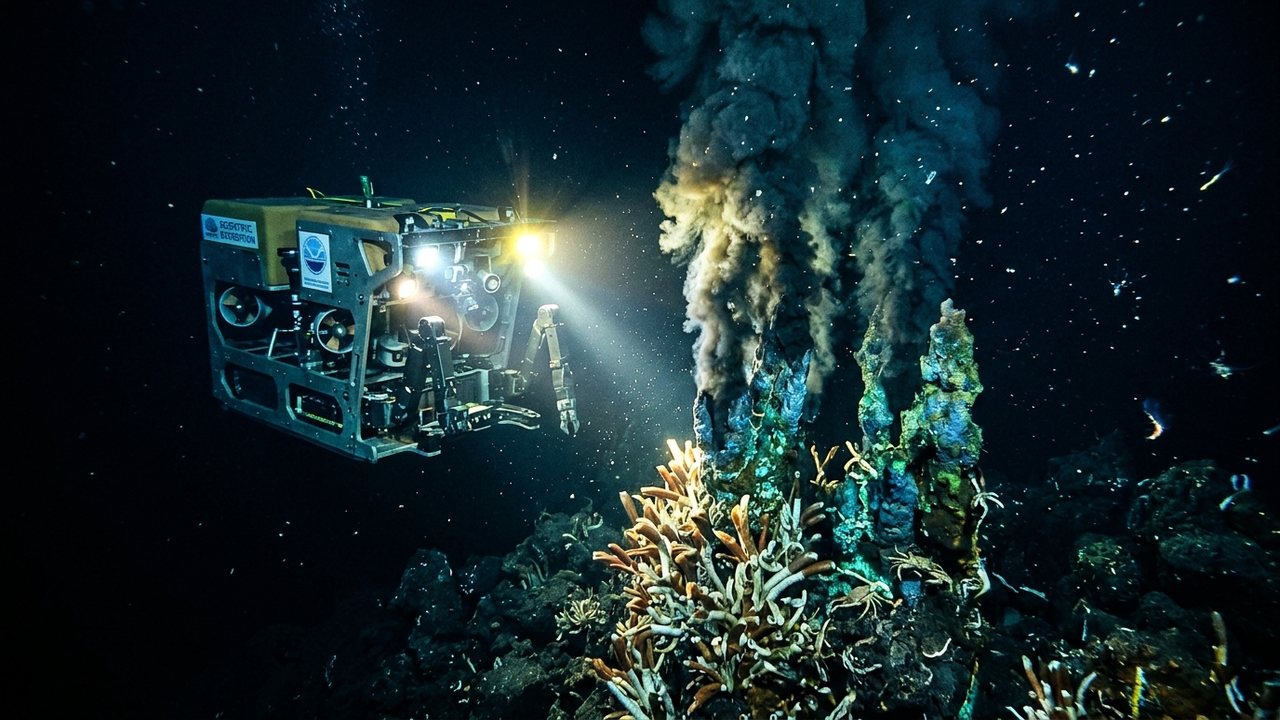
Operating at a depth of 3,400 meters along an ultra-slow-spreading mid-ocean ridge, a remotely operated vehicle (ROV) has mapped five hydrothermal sulfide chimneys venting mineral-rich fluids at 380°C. Shipboard mass-spectrometry logs show dissolved hydrogen and methane concentrations three times higher than adjacent vent fields.
During the expedition's 4K YouTube dive broadcast, marine geologists guided the ROV's manipulator arm to collect pressurized fluid cores from the chimney rims, revealing dense mats of thermophilic archaea and symbiotic tubeworms flourishing without sunlight or photosynthetic oxygen.
Multi-Source Triangulation & Primary Evidence
- Shipboard Mass-Spectrometry Logs: Five newly mapped sulfide chimneys at 3,400m depth vent mineral plumes at 380°C with 3x elevated dissolved hydrogen.
- YouTube 4K ROV Dive Broadcast: Pressurized fluid samplers captured dense thermophilic archaea mats thriving in total darkness.
- X Marine Genomics Thread: Heat-stable hydrogenase enzymes isolated from these archaea remain active above 110°C for industrial green-chemical synthesis.
Genomic researchers reviewing preliminary sequence metadata noted that the heat-stable hydrogenase enzymes utilized by these deep-vent microbes remain catalytically active above 110°C, offering a practical template for high-temperature industrial carbon-capture and biocatalysis reactors.
Editorial Fact-Check: Deep-sea hydrothermal vents do not drive surface ocean warming; their thermal plumes dissipate into near-freezing abyssal water within a few hundred meters.
Related Multi-Source Investigations